
Taxi News
20 May 2026 · 4 min read
Why Is Taxi Advertising Cost-Effective Compared to Billboards?
Taxi advertising is often considered more cost-effective than traditional billboard advertising because it combines lower entry costs, higher mobility, better targeting flexibility, and longer exposure time in dense urban environments. While billboards still play a strong role in outdoor advertising, taxi advertising offers several efficiency advantages that make it attractive for brands looking to maximize reach without overspending.
Below is a structured breakdown of why taxi advertising delivers stronger value compared to billboards.
1. Lower Cost of Entry and Production
One of the main reasons taxi advertising is cost-effective is its lower upfront cost.
Billboard campaigns typically involve:
- High rental fees for fixed locations
- Construction and printing costs for large-format displays
- Additional charges for premium placements (highways, city centers)
In contrast, taxi advertising uses existing vehicle fleets, which significantly reduces infrastructure costs.
Common taxi ad formats include:
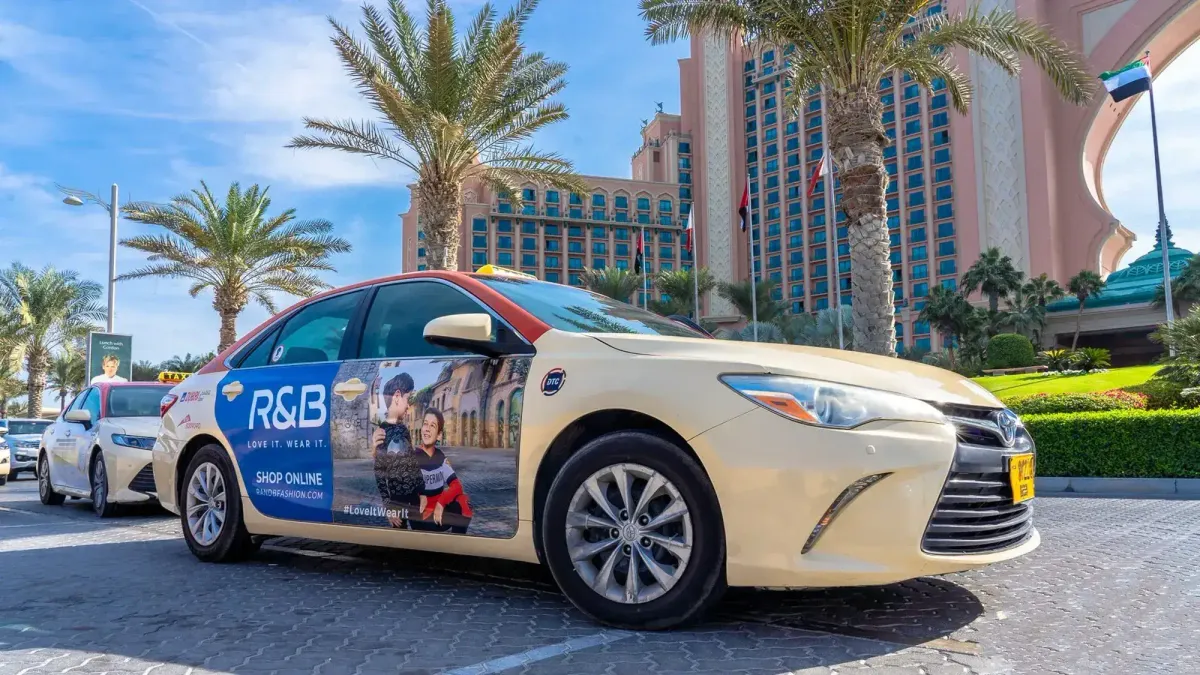
- Roof signs
- Door decals
- Full vehicle wraps
- Interior screen ads
Even full taxi wraps are usually cheaper than securing a premium billboard location in a major city for the same time period.
2. Constant Movement Creates Wider Reach
Billboards are static; they only reach people who pass a specific location. Taxi advertising, on the other hand, is mobile and dynamic.
Taxis move across:
- Business districts
- Airports
- Residential areas
- Shopping malls
- Event venues
This movement allows a single taxi to generate thousands of impressions per day across different audiences.
For example, a taxi operating in a busy city like Dubai or London can appear in multiple high-traffic zones in a single shift, something a billboard cannot do.
3. Higher Impression Density in Urban Areas
In dense cities, taxis are constantly visible in traffic congestion, pickup zones, and commercial hubs.
This creates:
- Repeated exposure to the same audience
- High visibility during peak commuting hours
- Strong presence in “waiting time” situations (traffic lights, jams)
Unlike billboards, which depend on line of sight and distance, taxi ads are often seen at close range, increasing attention and recall.
4. Better Targeting of High-Value Audiences
Taxi advertising naturally reaches urban, mobile, and higher-income audiences, which are often the target groups for many industries, such as:
- Finance
- Tourism
- Luxury goods
- Technology
For example, airport taxis frequently transport international travelers and business professionals. This creates premium exposure opportunities without needing to pay for expensive billboard placements near airports.
5. Longer Daily Exposure Time Per Vehicle
A single billboard is fixed and visible 24/7, but its audience is passive and dependent on traffic flow.
A taxi, however, generates active exposure throughout its operating hours. Each time it moves or stops in traffic, it creates a new impression opportunity.
Additionally:
- Interior taxi ads are viewed during ride duration
- Exterior ads are seen multiple times per trip
- Digital taxi screens rotate multiple campaigns per hour
This repeated exposure increases cost efficiency over time.
6. High Frequency of Brand Recall
Because taxis move through high-traffic urban environments repeatedly, they create frequency-based advertising impact.
People often see the same taxi ads multiple times per day or week, which improves:
- Brand recognition
- Message retention
- Purchase consideration
Billboards, while large and visible, often rely on a single point of exposure. Taxi ads build familiarity through repetition in different locations.
7. Flexible and Scalable Campaigns
Taxi advertising is highly flexible compared to fixed billboard contracts.
Brands can:
- Scale campaigns up or down easily
- Change designs more frequently
- Target specific time periods or seasons
- Run short-term or long-term campaigns
This flexibility helps reduce wasted spending. For example, a brand can increase taxi ad coverage during a product launch and reduce it afterward, without long-term fixed commitments.
Billboards often require longer contracts and higher cancellation costs.
8. Strong Local Market Penetration
Taxi advertising is especially effective for local market penetration.
Because taxis operate within city limits, they provide continuous exposure to:
- Local commuters
- Tourists
- Business districts
- Event crowds
This makes them ideal for businesses that rely on local awareness, such as restaurants, retail stores, and service providers.
Billboards may cover large audiences, but they are often limited to a single geographic location.
9. Better ROI Through Combined Visibility
Taxi ads often combine multiple exposure points:
- Exterior vehicle branding
- Interior passenger messaging
- Optional digital screens
This multi-layered visibility increases return on investment (ROI) because a single vehicle generates several forms of impressions simultaneously.
In contrast, a billboard is typically limited to one visual message in one location.
Related News
30 December 2025 · 5 min read
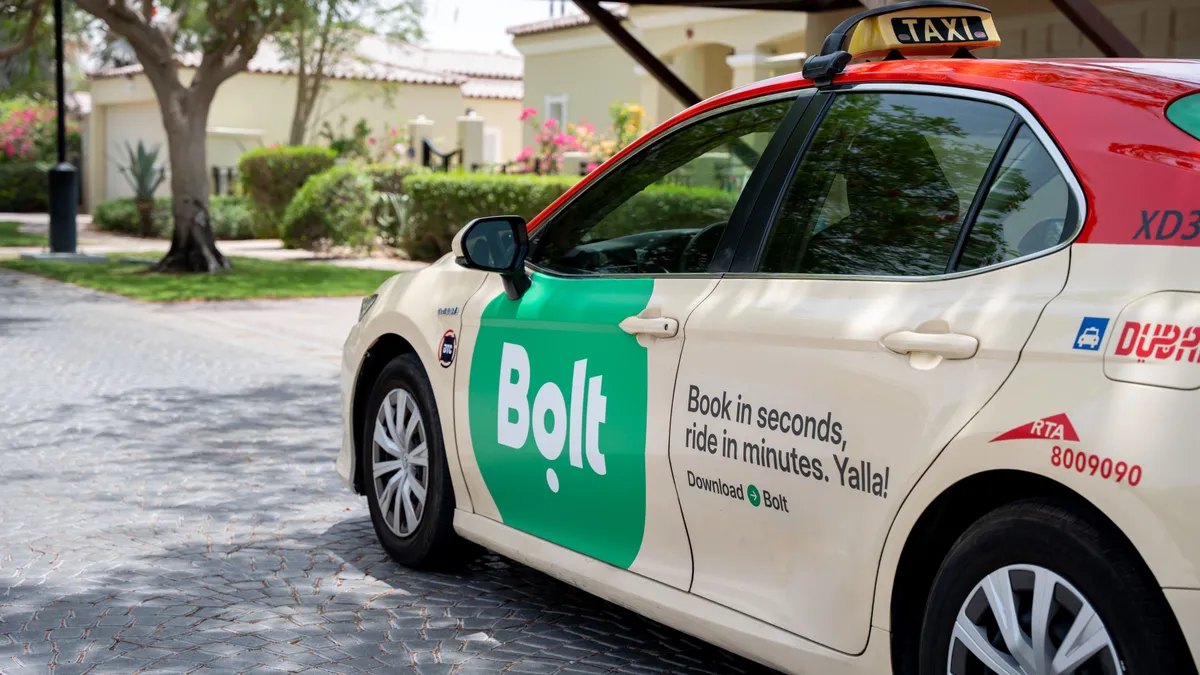
Bolt Adds 6,000 Taxis in UAE: What This Means for Brands Looking to Advertise
Bolt adds 6,000 taxis in the UAE, unlocking major ad potential in Dubai. Maximise brand visibility with this high-impact taxi advertising opportunity.
Read Article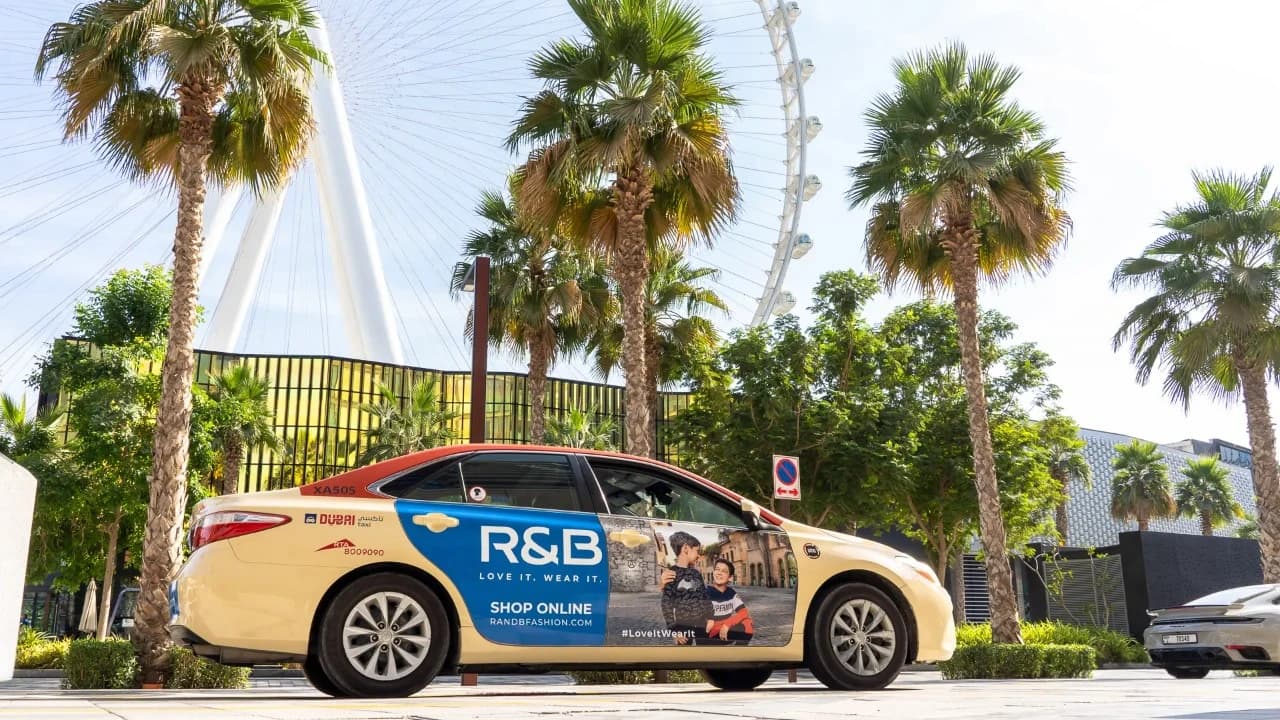
30 December 2025 · 3 min read
Wrapped in Style: How R&B’s Taxi Takeover Transformed Fashion Advertising in Dubai
Discover how R&B’s taxi advertising campaign in Dubai drove buzz, boosted footfall and left a lasting impression—an inspiring case study by Taxi Advertising.
Read Case StudyTaxi campaigns
Take a look at our recent campaigns, and join our global success story.
ADIB
UAE
R&B
UAE


Ready to start your meter?
Ready to Start? Fill in the form below, and one of our media experts will get back to you.