Taxi News
22 April 2026 · 4 min read
How to create a taxi advertising strategy?
Creating a taxi advertising strategy is about turning moving vehicles into high-visibility, high-frequency media channels that consistently expose your brand to people across a city. Because taxis operate in dense urban areas, airports, malls, hotels, and business districts, they offer a unique mix of mobility, repetition, and audience targeting.
Here’s a clear, practical way to build an effective taxi advertising strategy from start to finish.
1. Define Your Campaign Objective
Before anything else, decide what you actually want taxi advertising to achieve. Without a clear goal, you’ll end up with exposure that doesn’t translate into results.
Common objectives include:
- Brand awareness (getting your name seen repeatedly)
- Driving app downloads or website visits
- Promoting a product launch or limited-time offer
- Targeting tourists or commuters in specific areas
- Supporting a larger multi-channel campaign
For example, a fintech app might focus on downloads, while a luxury brand might focus on visibility and prestige.
2. Identify Your Target Audience
Taxi advertising is powerful because taxis naturally reach diverse audiences, but you still need to narrow your focus.
Ask:
- Who are you trying to reach? (tourists, professionals, students, high-income groups)
- Where are they most likely to be picked up or dropped off?
- What time of day are they most active?
In cities like Dubai, for example, airport taxis are ideal for tourists, while business district routes target professionals.
3. Choose the Right Taxi Ad Format
Taxi advertising comes in several formats, and your strategy should match the format to your objective.
Exterior taxi ads
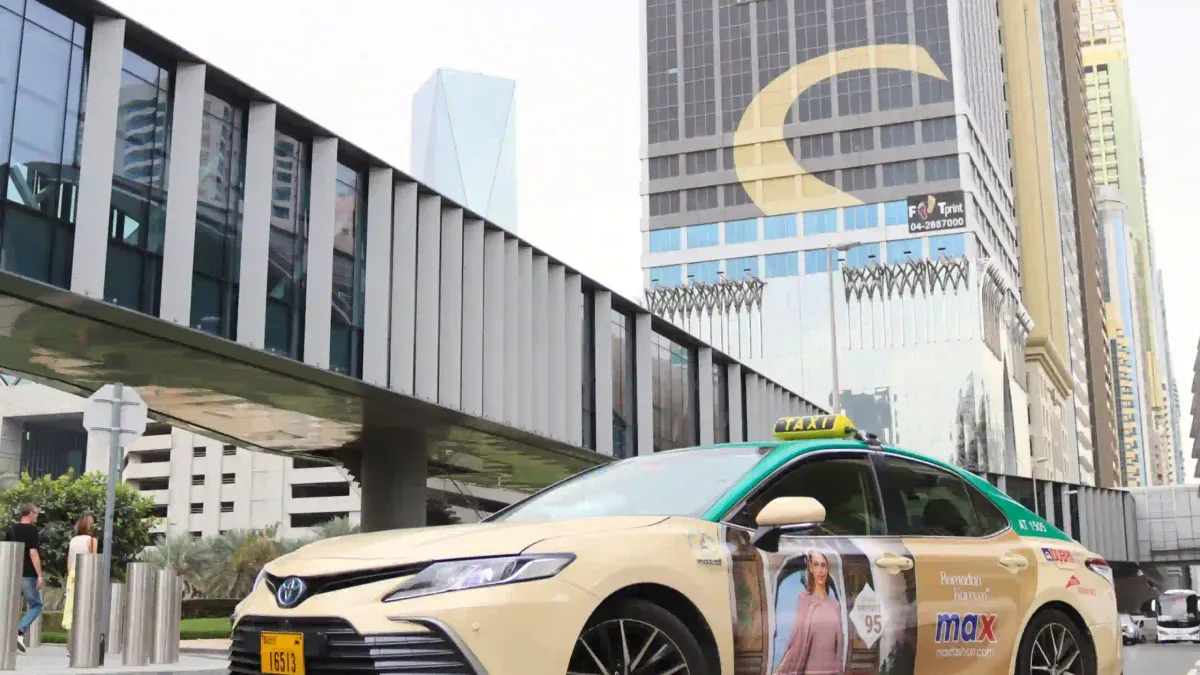
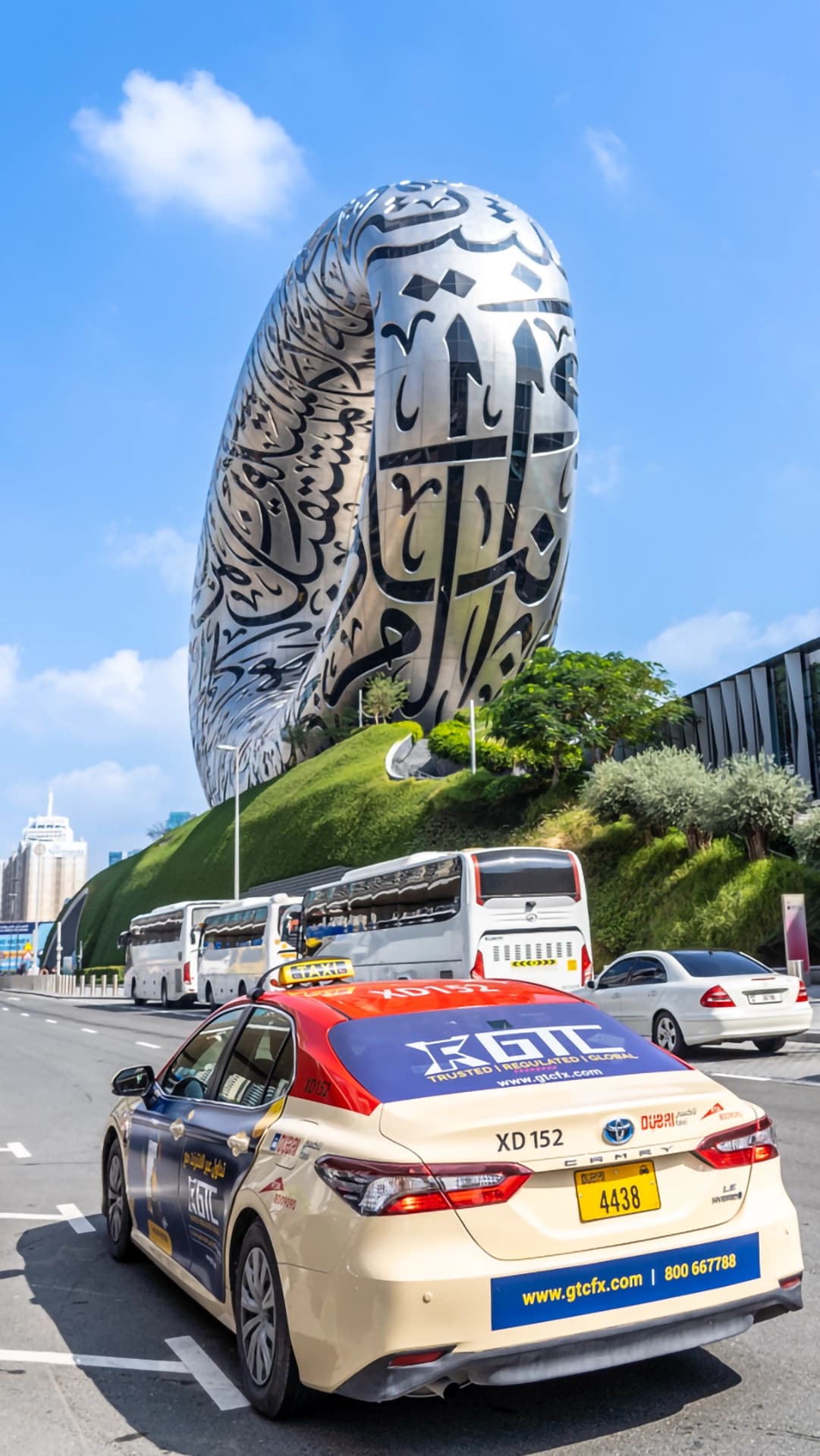
- Full wraps, partial wraps, or rooftop ads
- High visibility on roads
- Best for mass brand awareness
Interior taxi ads
- Seat-back screens, printed cards, QR codes
- Great for engagement (people have time inside taxis)
- Best for app installs, offers, and direct response
Digital taxi ads (in some markets)
- Screens inside taxis with video content
- Dynamic and more engaging than static ads
- Can rotate multiple campaigns
A strong strategy often combines exterior & interior formats for maximum impact.
4. Select Geographic Targeting Areas
Taxi ads are location-based by nature, but you can still refine your targeting strategically.
Break your campaign areas into:
- Airports (tourist-heavy & international audience)
- Business districts (professionals & decision-makers)
- Shopping zones (consumers with purchase intent)
- Hotels and entertainment areas (high-spending visitors)
- Residential hubs (daily commuters)
Instead of spreading everywhere, focus on 2–4 high-value zones where your audience concentrates.
5. Design a High-Impact Creative
Taxi ads are seen quickly, often in just a few seconds, so design matters a lot.
Good taxi ad design should:
- Be bold and simple
- Use large & readable fonts
- Focus on one key message only
- Include strong branding (logo + colors)
- Avoid clutter or too much text
For interior ads, you can go deeper:
- Add QR codes
- Include offers or discount codes
- Use short & persuasive copy
6. Plan Budget and Fleet Size
Your reach depends heavily on how many taxis you use and for how long.
Key budgeting factors:
- Number of taxis in your campaign
- Duration (weeks vs months)
- Type of ad (wraps are more expensive than interior cards)
- City regulations and licensing fees
7. Integrate Digital Tracking
Modern taxi advertising should not operate in isolation.
Add tracking tools such as:
- QR codes for app downloads or landing pages
- Short, memorable URLs (e.g., yourbrand.ae/offer)
- Promo codes unique to taxi campaigns
- Geo-tagged landing pages for different zones
This helps you measure real performance.
8. Coordinate with Other Marketing Channels
Taxi advertising works best as part of a broader ecosystem.
Combine it with:
- Social media ads (retarget people who scan QR codes)
- Google search ads (capture intent after exposure)
- Influencer campaigns (reinforce brand messaging)
- Outdoor advertising (billboards near taxi-heavy zones)
This repetition across channels increases conversion rates significantly.
9. Launch, Monitor, and Optimize
Once live, don’t treat the campaign as “set and forget.”
Monitor:
- QR code scans
- Website traffic spikes
- App installs by region
- Coupon usage rates
If certain areas or formats perform better, adjust your fleet distribution or creative messaging.
10. Measure Success Against Objectives
Finally, evaluate performance based on your original goal.
Examples:
- Brand awareness → reach, impressions & recall surveys
- App installs → cost per install & conversion rate
- Sales → revenue attributed to promo codes
- Engagement → QR scans & website sessions
A strong taxi advertising strategy always connects exposure to measurable outcomes.
Related News
30 December 2025 · 5 min read
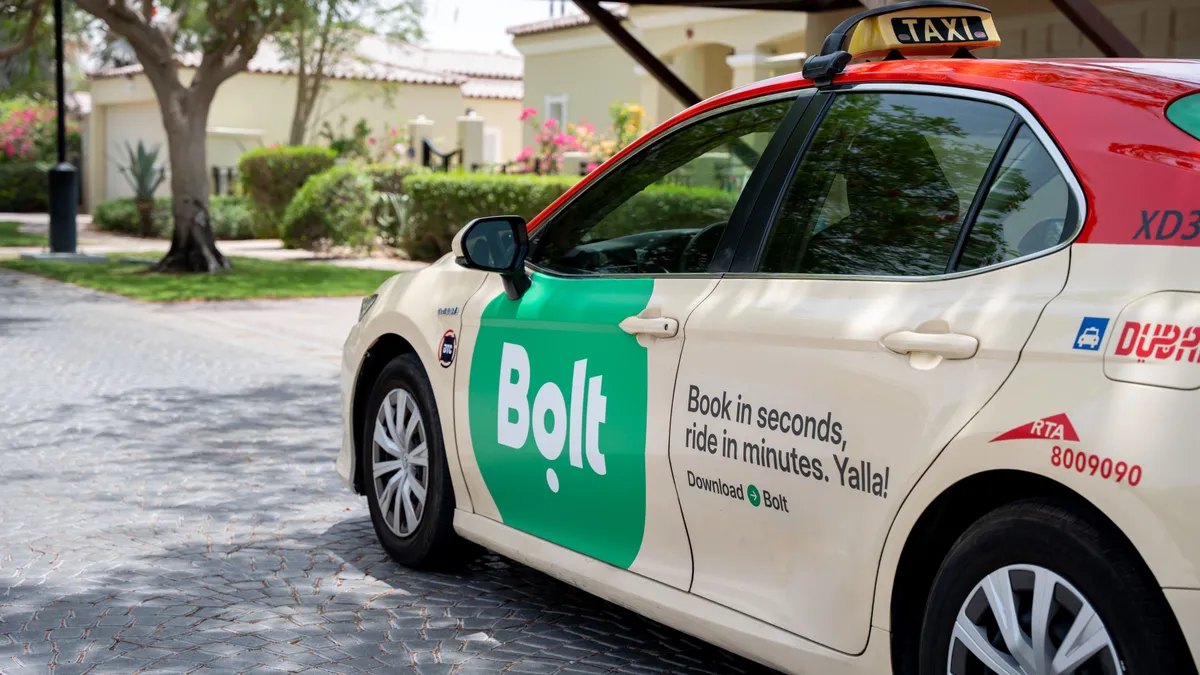
Bolt Adds 6,000 Taxis in UAE: What This Means for Brands Looking to Advertise
Bolt adds 6,000 taxis in the UAE, unlocking major ad potential in Dubai. Maximise brand visibility with this high-impact taxi advertising opportunity.
Read Article.png&w=3840&q=75)
30 December 2025 · 2 min read
Taxi Advertising Gets a SpongeBob Makeover with OSN+
OSN+ transforms Dubai taxis with a vibrant SpongeBob SquarePants campaign, boosting brand visibility and sparking nostalgia through mobile OOH advertising.
Read ArticleTaxi campaigns
Take a look at our recent campaigns, and join our global success story.
ADIB
UAE
R&B
UAE

Ready to start your meter?
Ready to Start? Fill in the form below, and one of our media experts will get back to you.